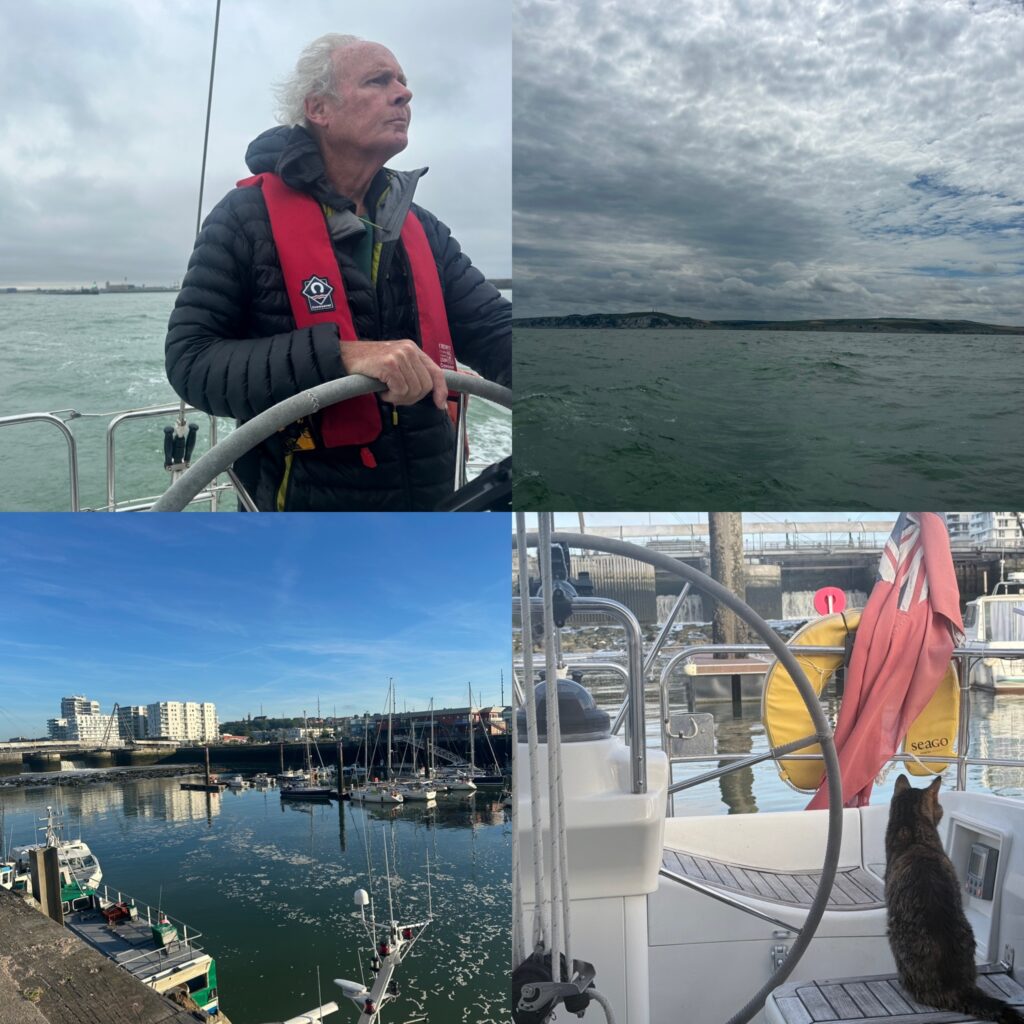
Thursday 11th June
We were able to leave Bruinisse relatively easily, the lock opened soon after we arrived.
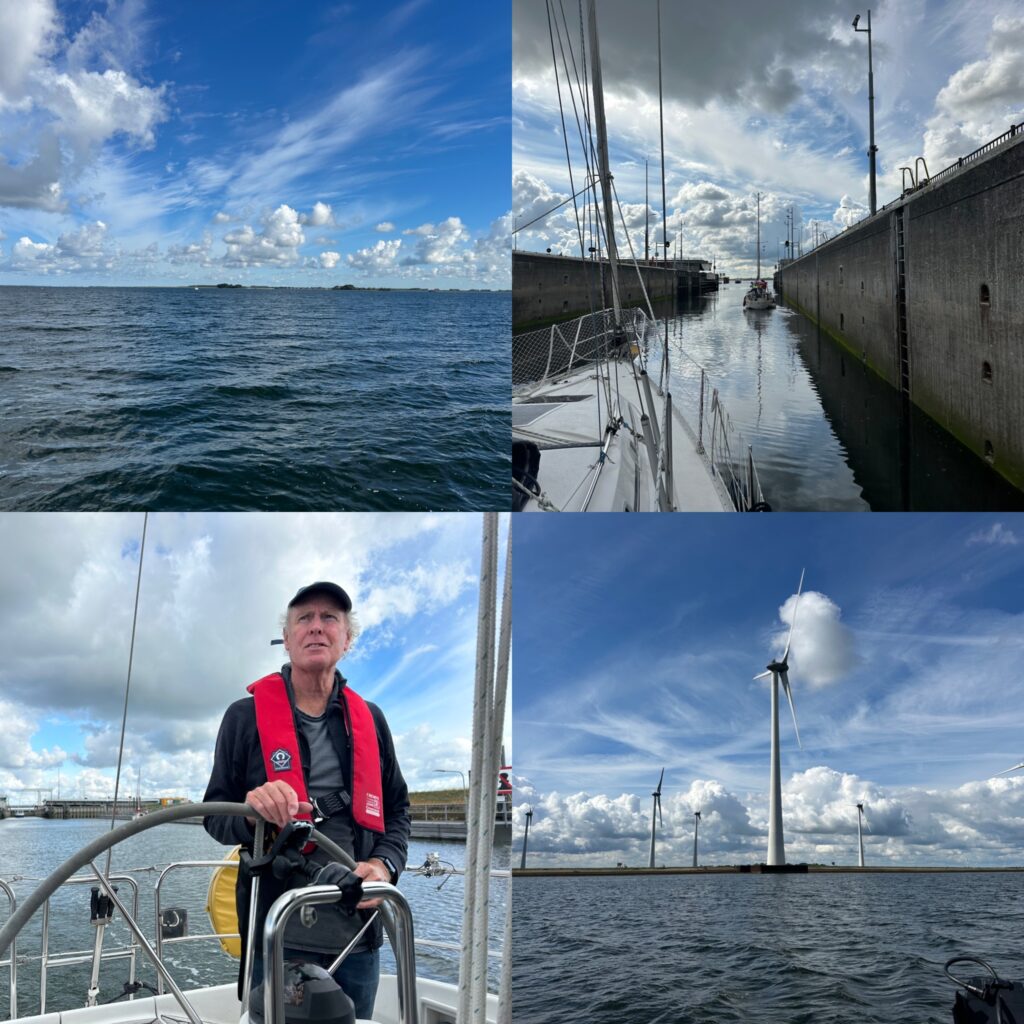
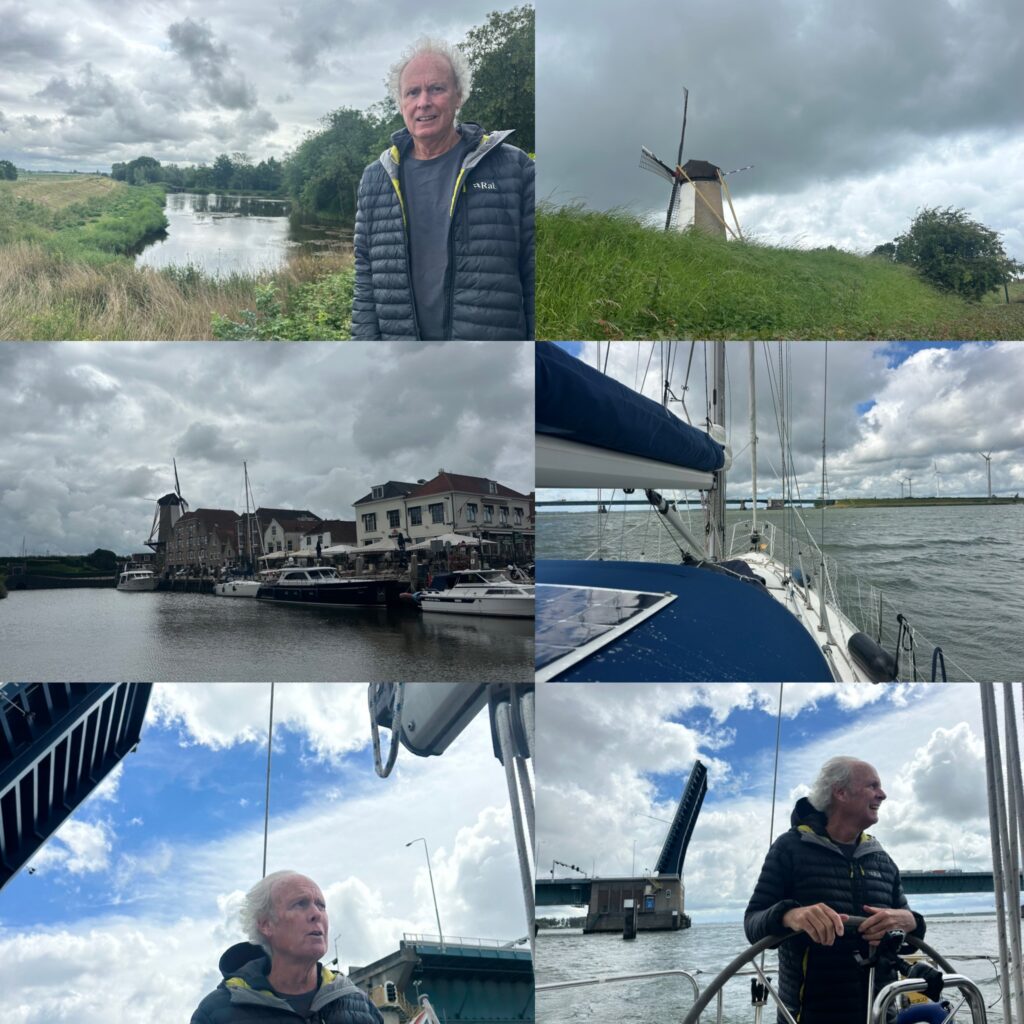
We made our way to Willemstad via some worrying bridges. Richard had checked our mast height several times but it was still nerve wracking going under the bridges. Your eyes play tricks on you and you can’t believe you will be able to pass underneath.
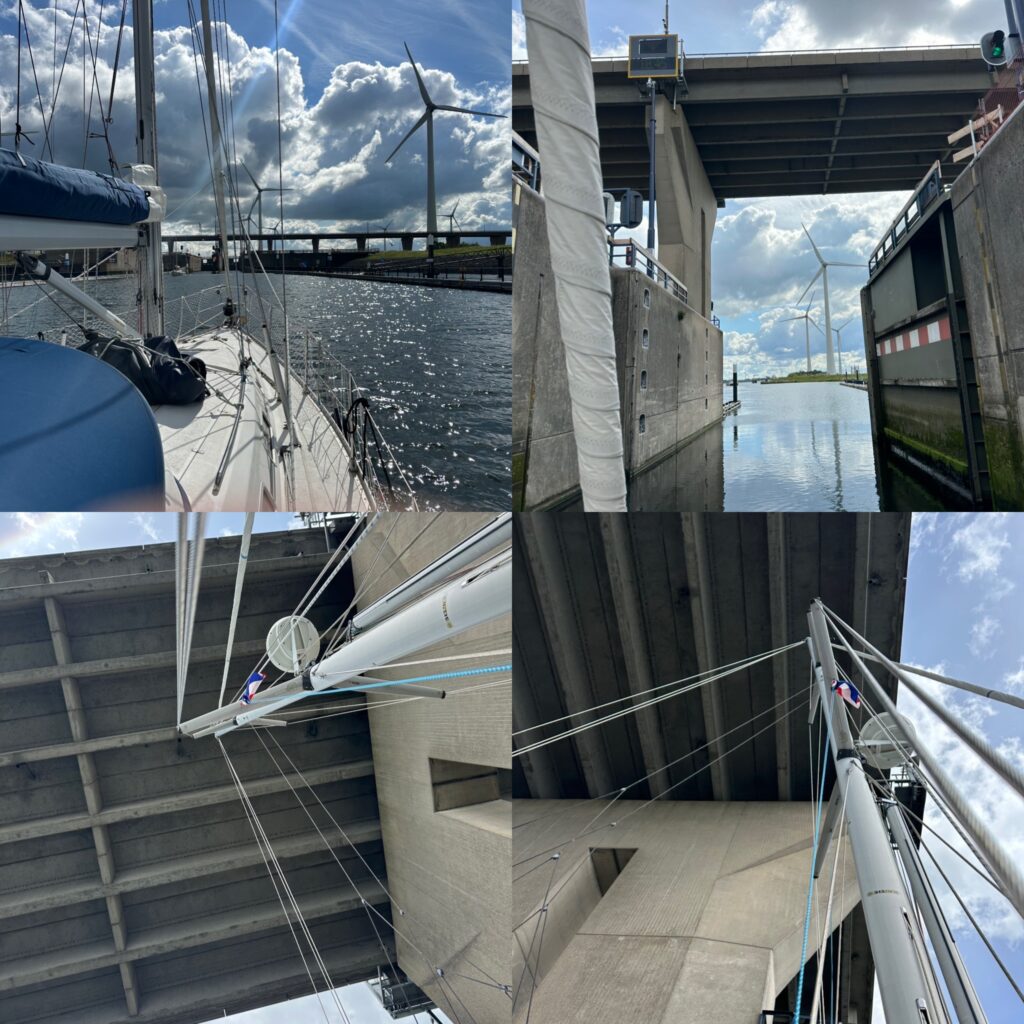
It was rather grey when we arrived in Willemstad and we had a quick look around before there was a sudden downpour of rain. We retreated to the boat for our evening meal as few places seemed to be open.
Friday wet and windy 23-32mph
We were particularly indecisive this morning. It was wet and windy and Willemstad was underwhelming with very little open although they were digging the roads and pavements up. After much faffing we topped up with fuel and had a walk and coffee. We chose to go on the Northern side of the Haringviliet which had to be carefully timed with the bridge opening.
We had a good evening in Hellevoetsluis with a hearty steak meal at a restaurant run by a friendly Mancunian.
Saturday grey, still a little windy but fine
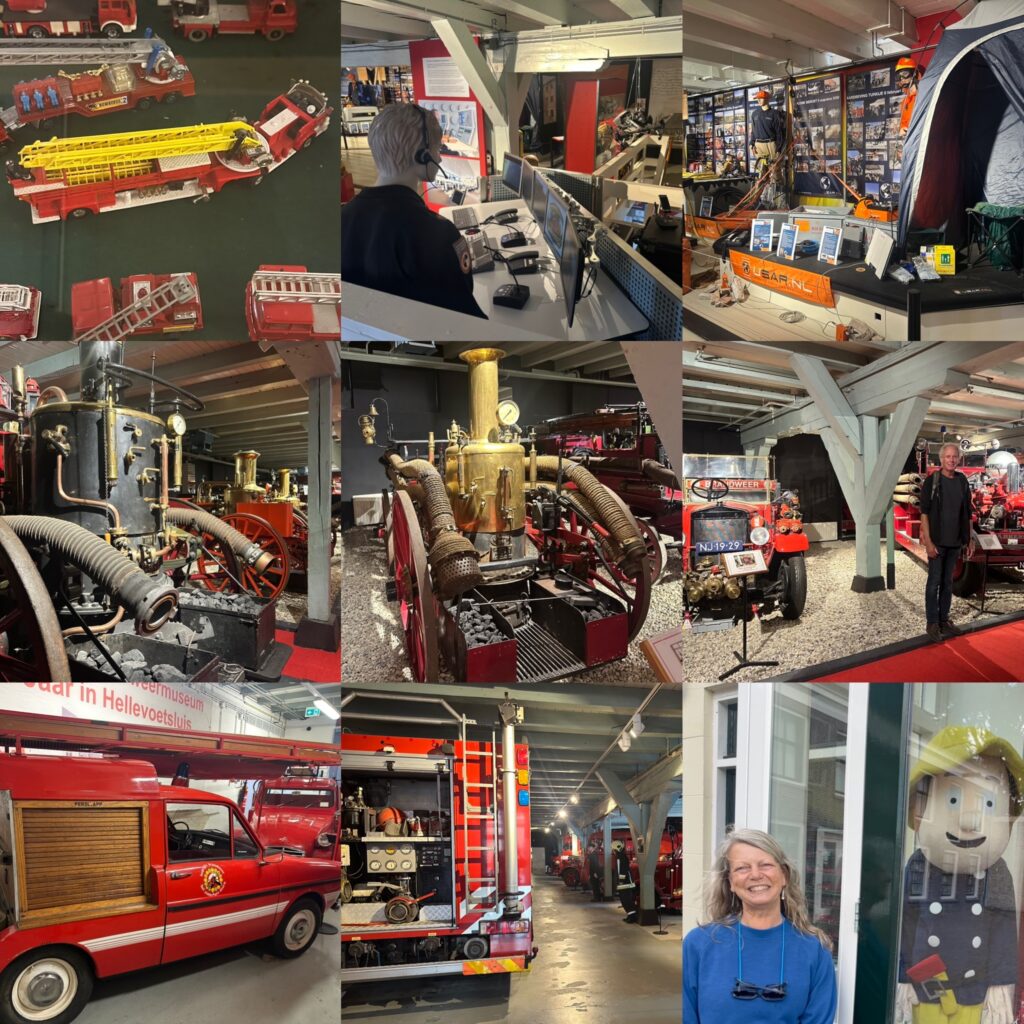
Well Heelevoetsluis was a little gem. We walked from the marina into town and had coffee and Dutch apple tart. Tempted by the museum we bought tickets for a fire service museum? 🤔 It was amazing, over three floors, firefighting history, equipment, fire engines and modern international disaster rescue. From my brother Shaun’s toy fire engine, horse drawn steam pumped examples, a Citreon DV2, a DAF car and full size modern examples.
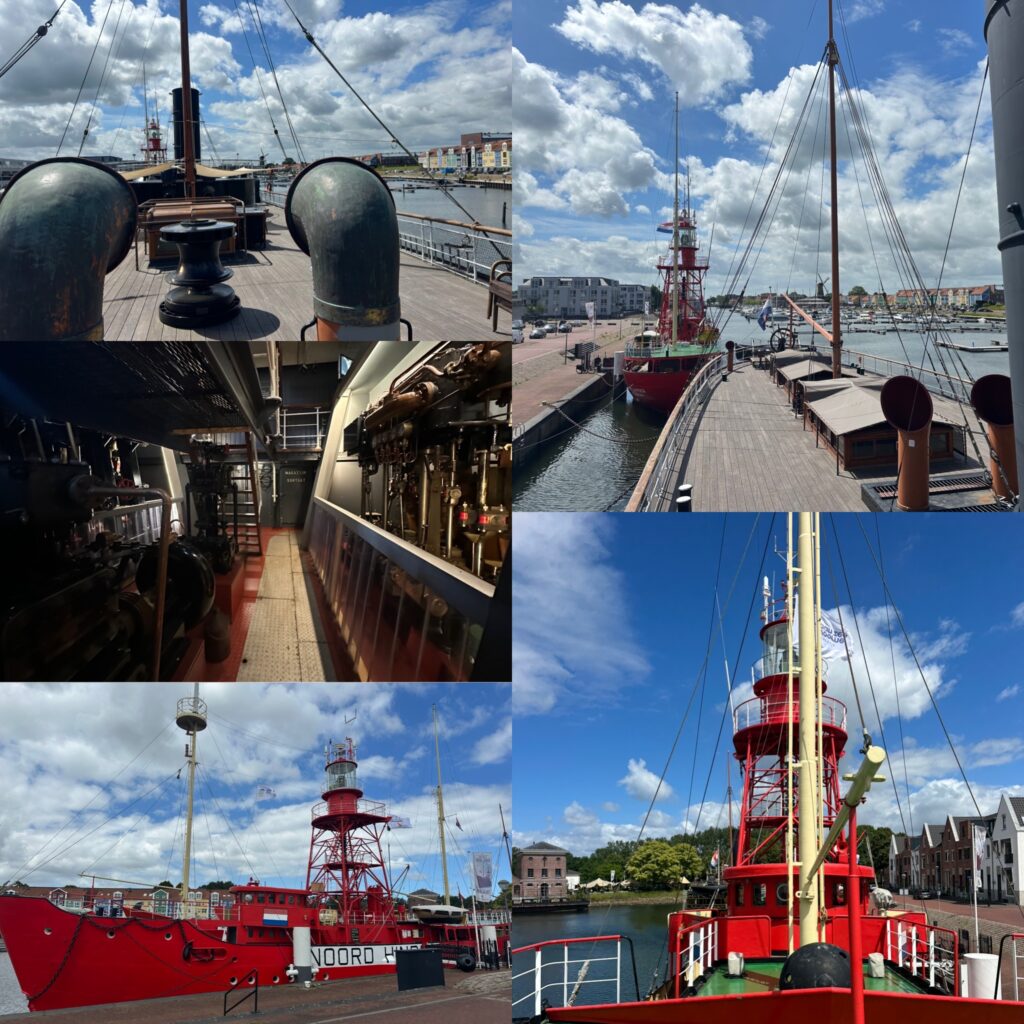
Near the museum were three ships that you could visit. The first we looked around was built in Glasgow as a sailing ship but later had a steam engine fitted. It reminded us of HMS Warrior in Portsmouth. We then looked around a lightship that used to be found in the North Sea but has been replaced by a buoy that has far brighter LED lights. The interesting volunteers used to work on the lightship. They said there were 11 crew at all times and they worked two weeks on and two weeks off.
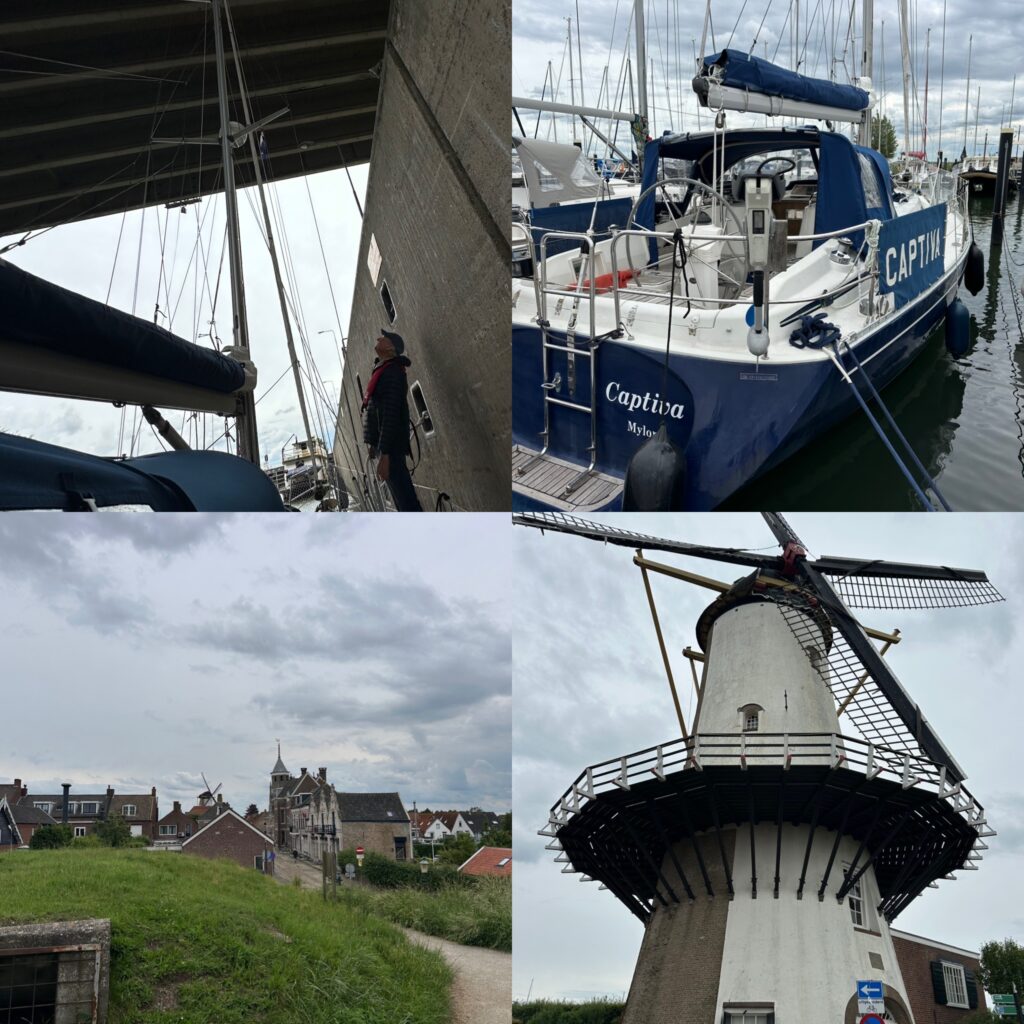
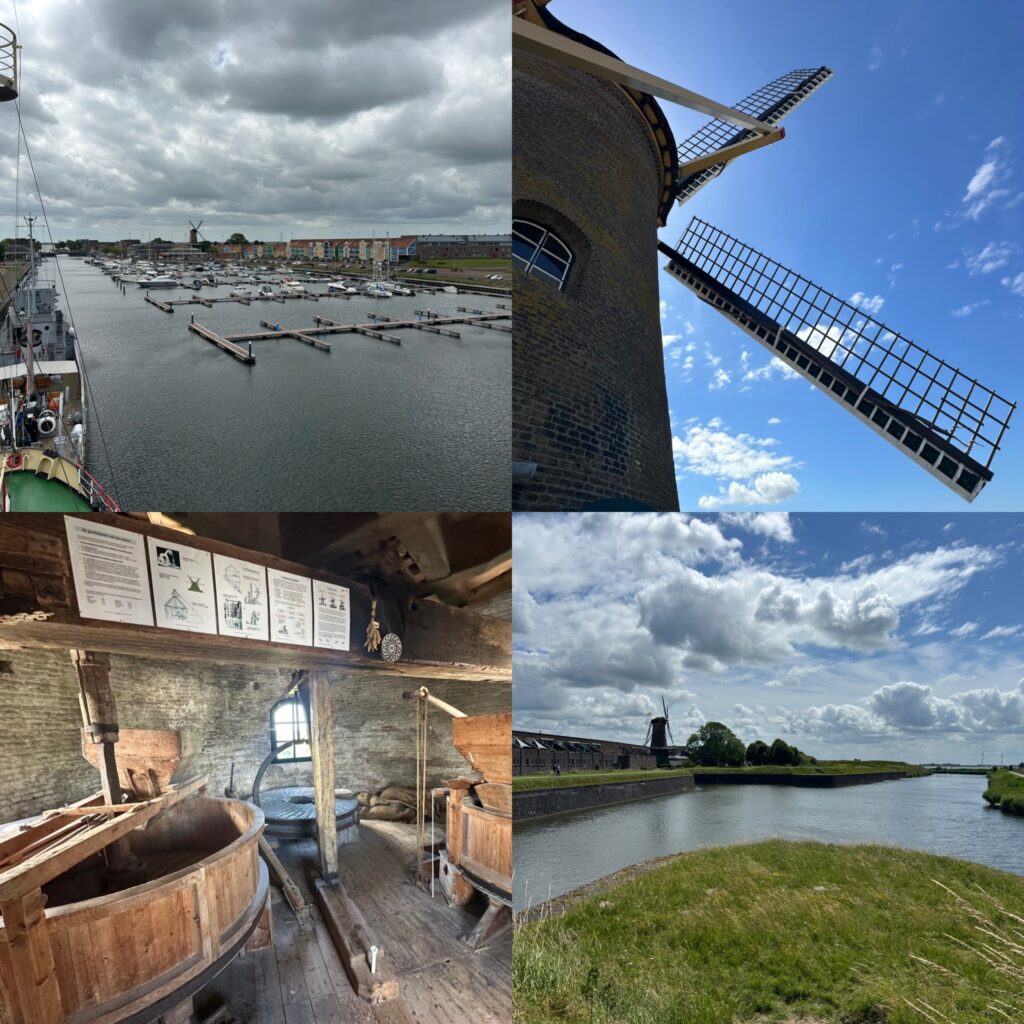
After lunch we explored the working windmill, climbing the many narrow steps.
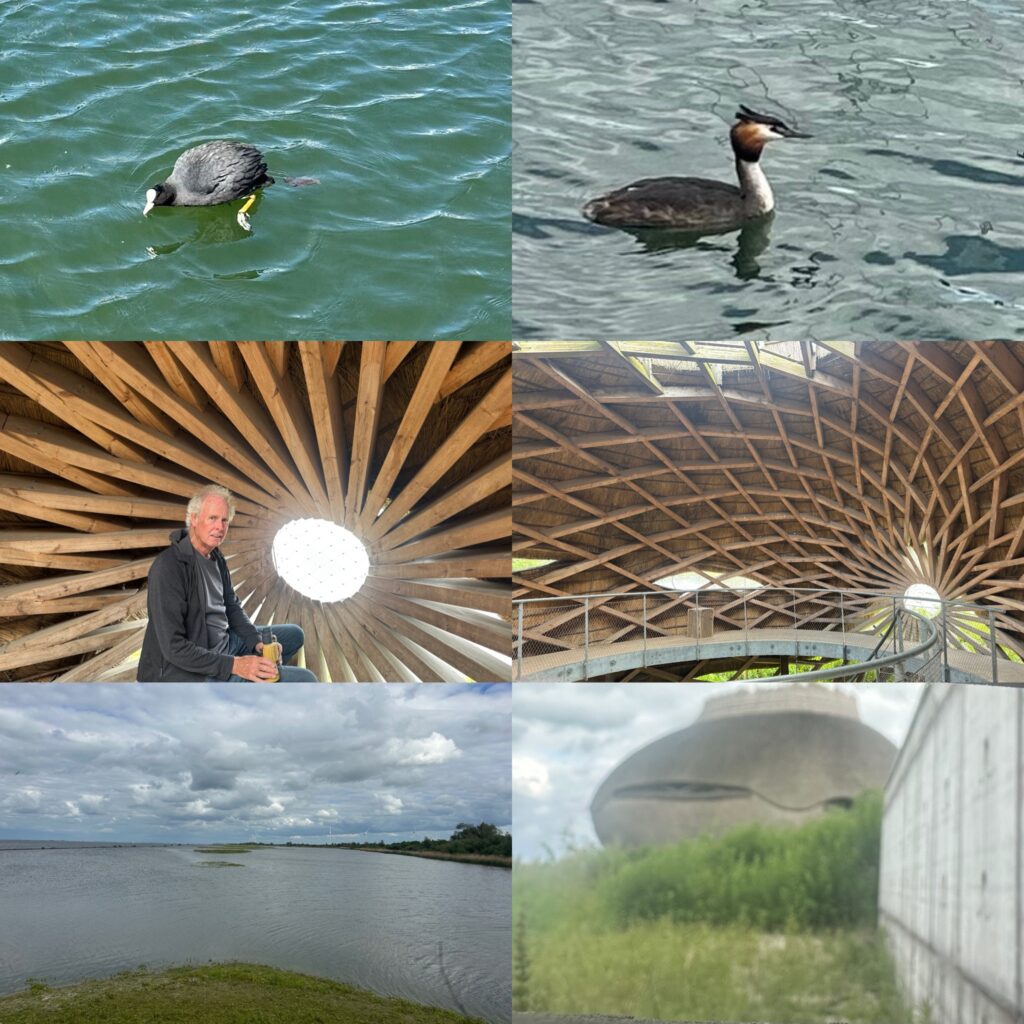
We returned to the boat and motored across past the weir that is a barrier to the North sea and controls water from the Rhine. We tied up at marina Stellendam and had a quick wander ashore to the bird hide along the coast. All along the Haringvilliet estuary we had seen many birds. At the hide we saw terns, coots, spoonbills, crested grebes, a giant egret and oyster catchers.
Sunday, grey, winds 25 initially NW dropping to 15
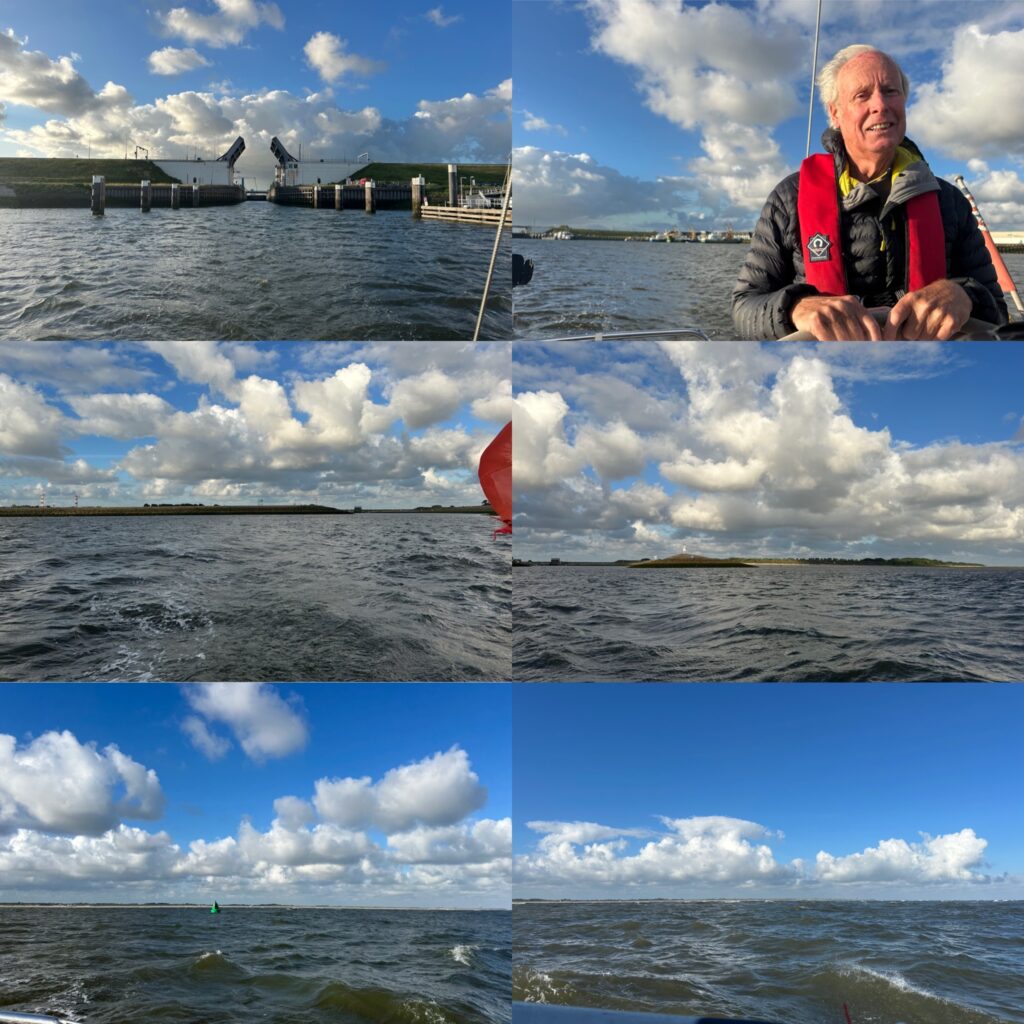
We left Stelendam at 6am and headed to the lock and bridge waiting for our return to the North Sea. We negotiated the lock ok, this was one of the first where we saw a significant change in water level. We noticed this when we realised we had tied one of the ropes to tight 😬 We safely nudged Captiva out to sea where we had to follow a buoyed channel very carefully. The marina had assured us that the channel was regularly dredged to a depth of 4m. Unfortunately the onshore winds were a little higher than forecast so it was a nerve wracking and bumpy ride out to the open sea. We had planned to sail direct to Dunkirk, but that would have meant arriving at 11pm. We opted instead to return to Ostend for one night arriving at a more civilised 6:30pm.
Monday wind on the nose 28-15mph
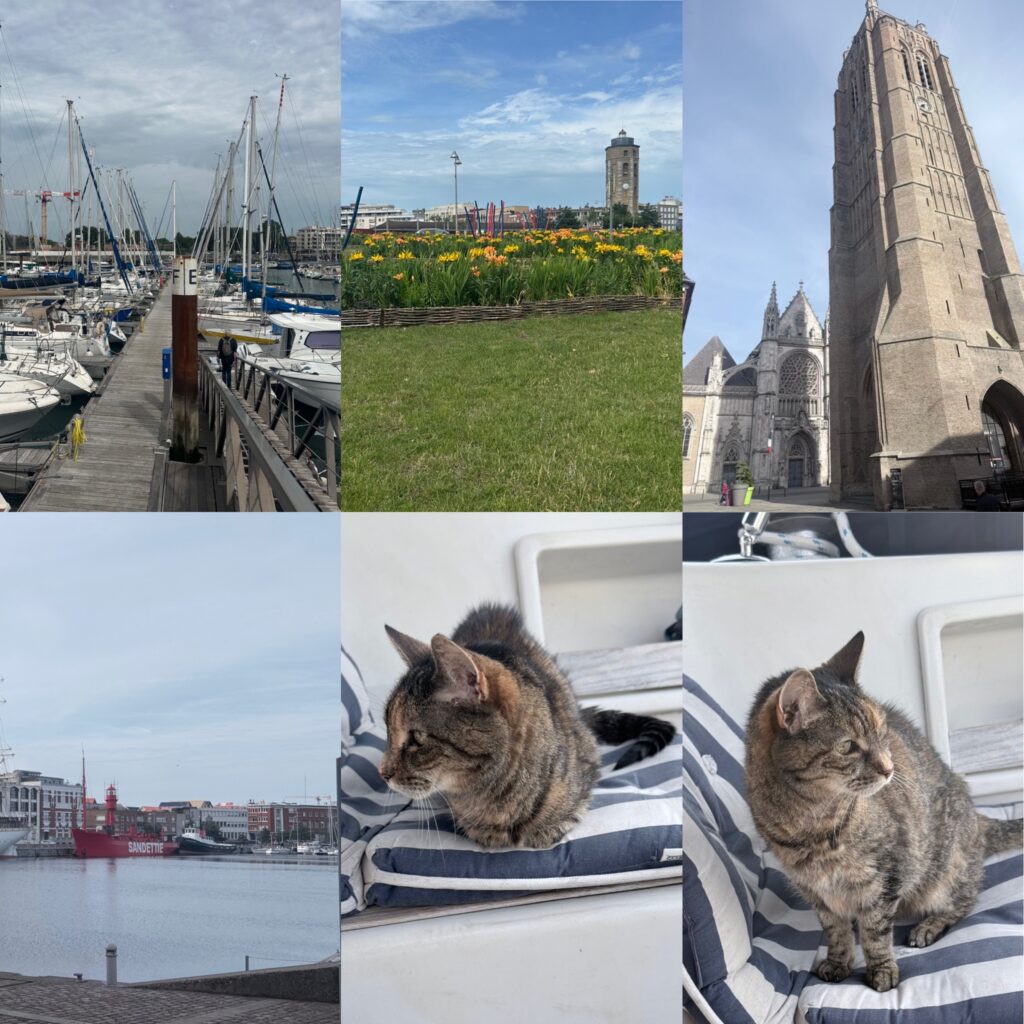
We left Ostende at 7am with winds higher than expected and as ever on the nose, not at all what was forecast. Another long day arriving in Dunkerque at 4pm. We had planned to stay just one night but the harbour master was so welcoming and the area sounded so interesting, we quickly opted for two nights. We had a walk around one side and enjoyed a pizza.
Tuesday ☀️🌥️
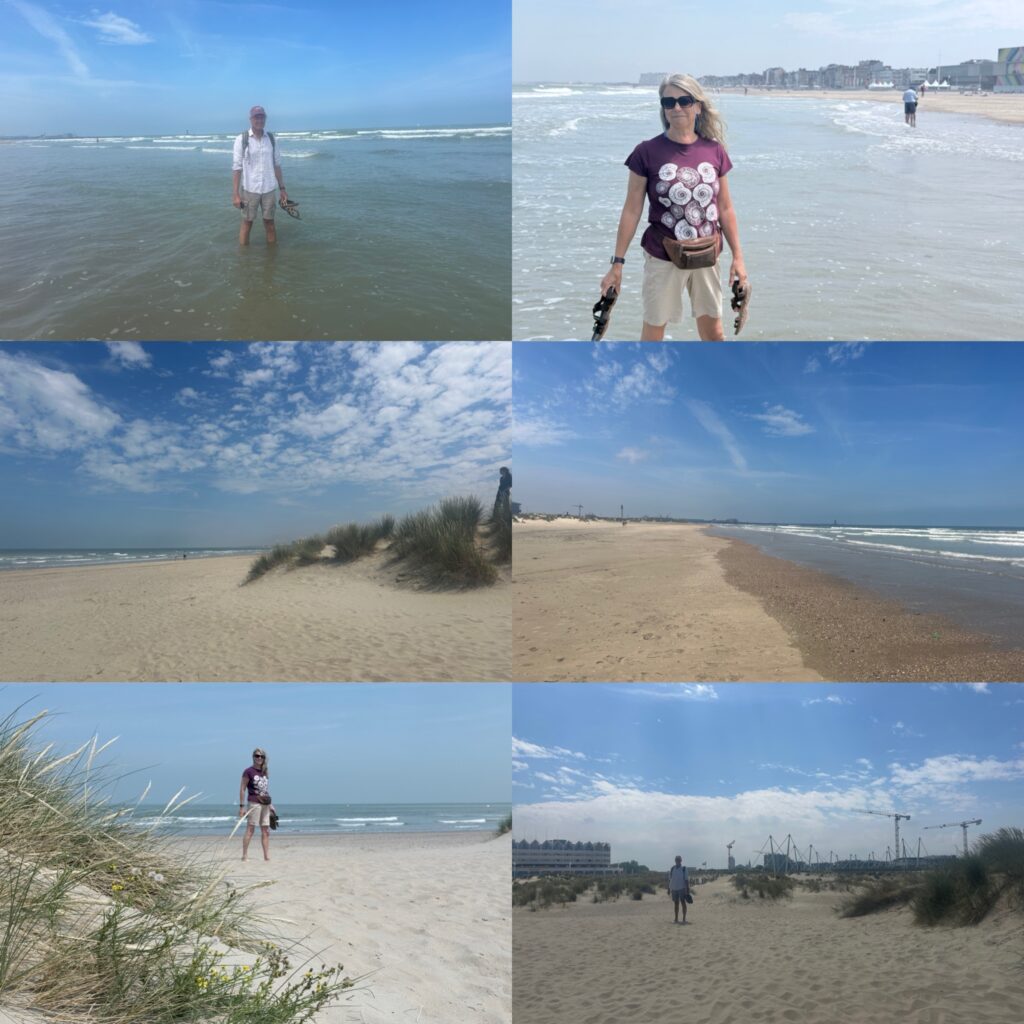
We walked to the opposite side of the harbour entrance towards THE beach. We had lunch overlooking the glistening sands then went for a walk and paddle in the North Sea.
We walked towards the art museum but it was ferme on Tuesdays 🤔 We were relieved to find that the Dunkerque 1940/Operation Dynamo Museum was open. The Museum is housed in the curtain walls of Bastion 32, which is a symbolic location, as it played a significant role during the events of Operation Dynamo and the Battle of Dunkirk. The museum documents the events leading up to the small boats operation which resulted in 338,226 soldiers being rescued including 224,320 British and around 133,000 French soldiers, in June 1940 from the beach of Dunkerque. There were 41 destroyers (of which 6 were sunk) and numerous small boats (933 ships in total and 236 were sunk). The museum documents this incredibly poignant story. So interesting (as someone who never studied this at school), will never forget it.

Wednesday 💨 sur le nez
We left at 7am when tides were slack hoping to be pushed along by the tide for most of the journey. We needed to reach Cap Gris Nez before the tide reversed. Unfortunately we were about 30 minutes too late and spent two hours with 4 knots of tide against us so moving at 0.2 knots, sometimes sideways. We were relieved to eventually pass the grey nose and turn towards Boulogne Sur Mer. Our first impressions were that we would stay one night. We managed to find an evening meal but further research led us to believe that the town maybe worth further exploration. We opted for two nights.